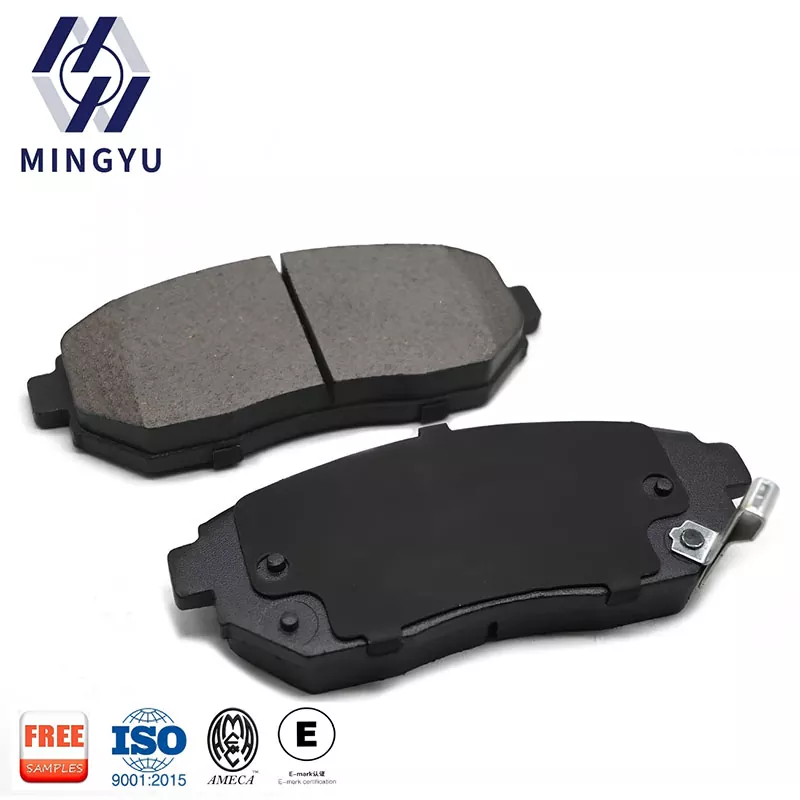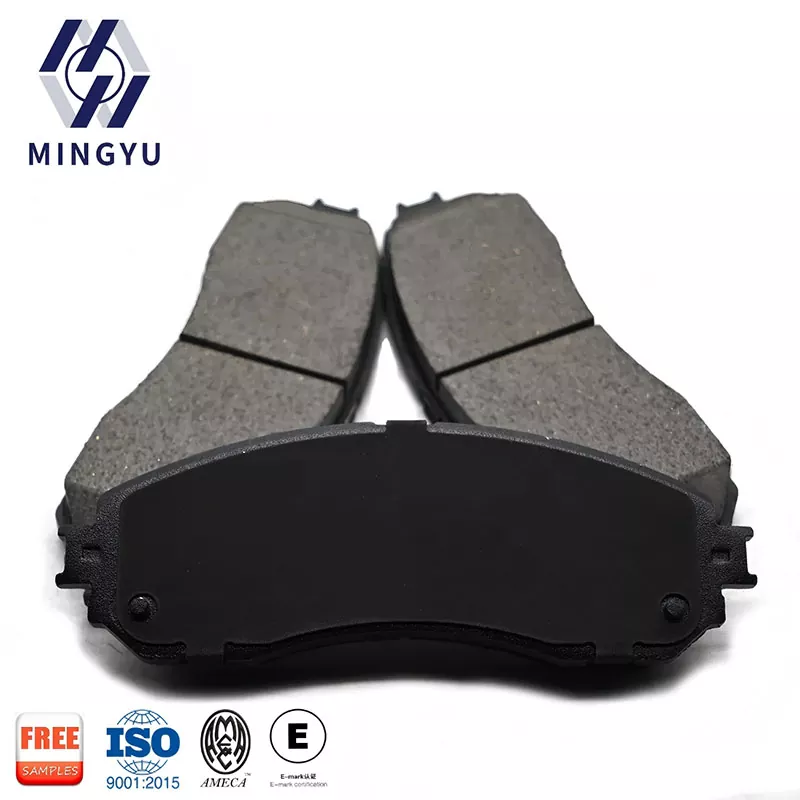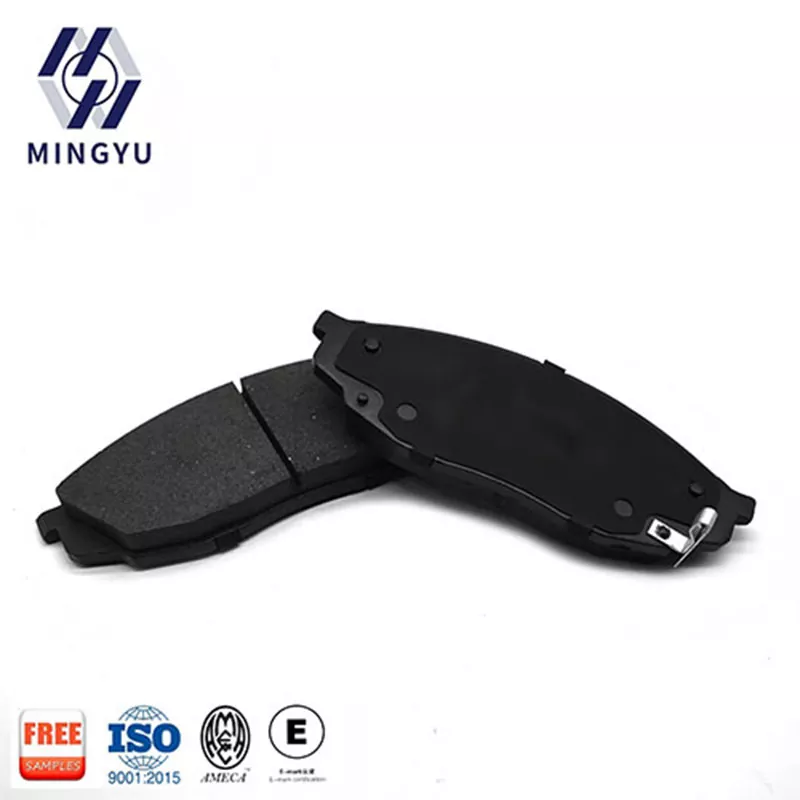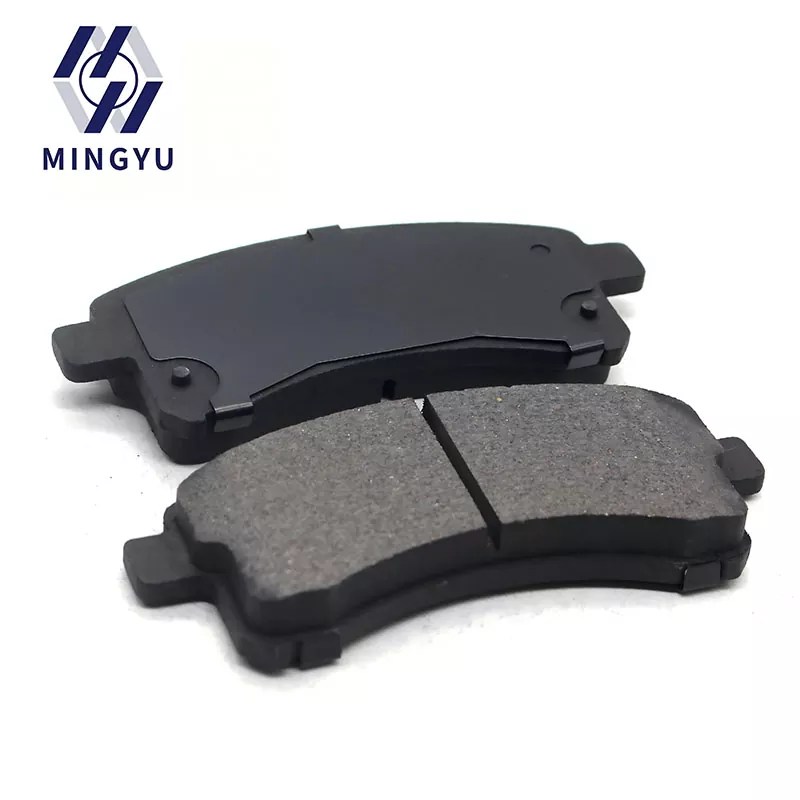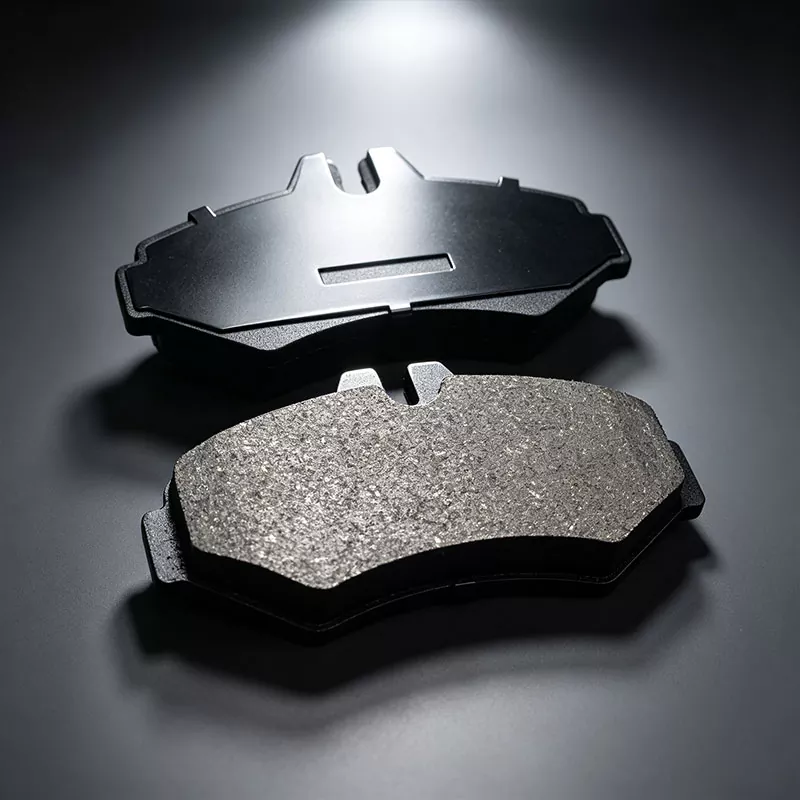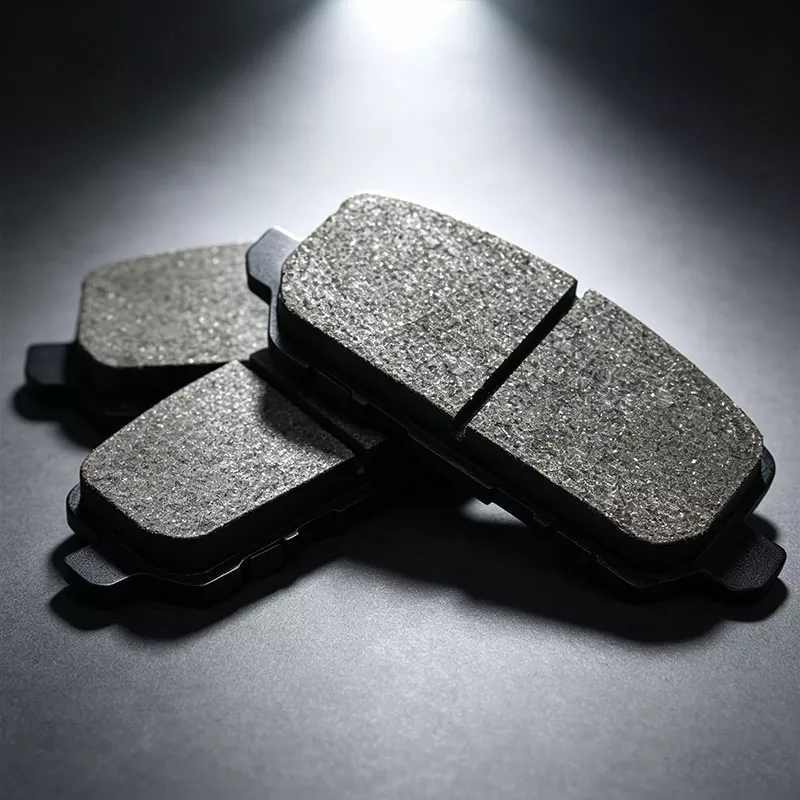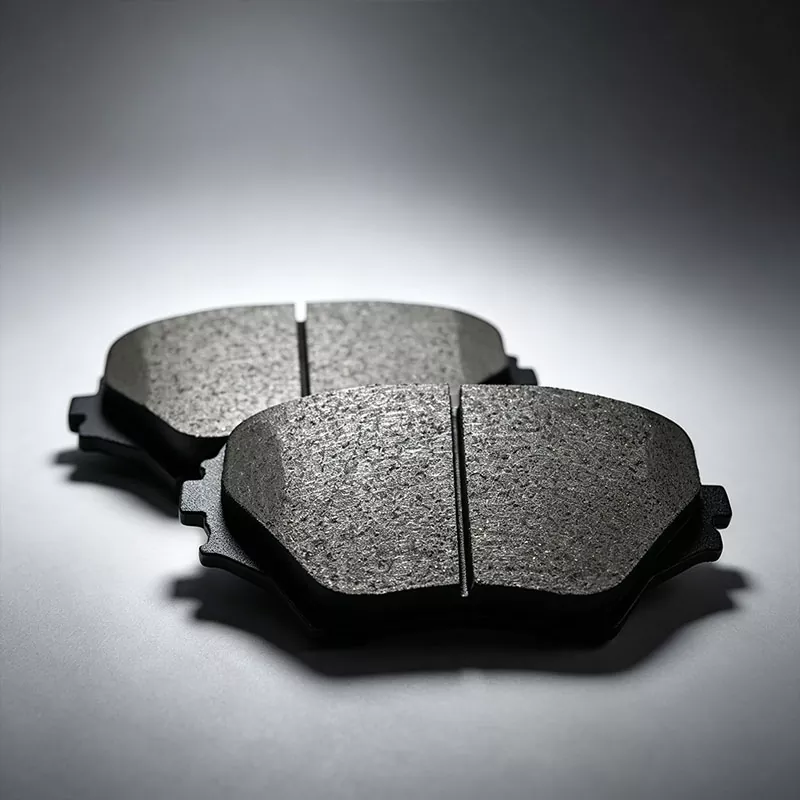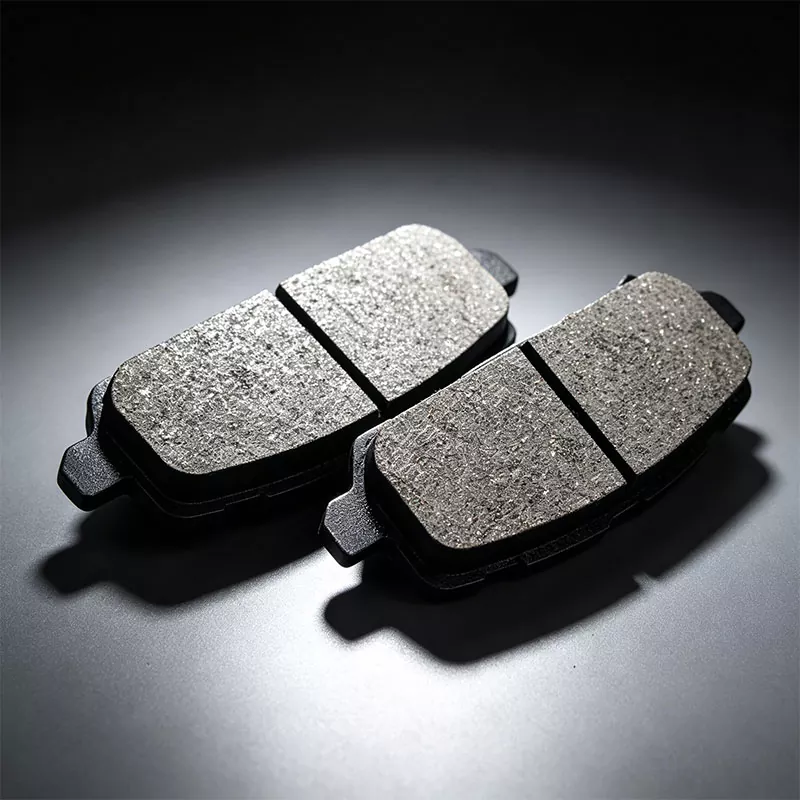
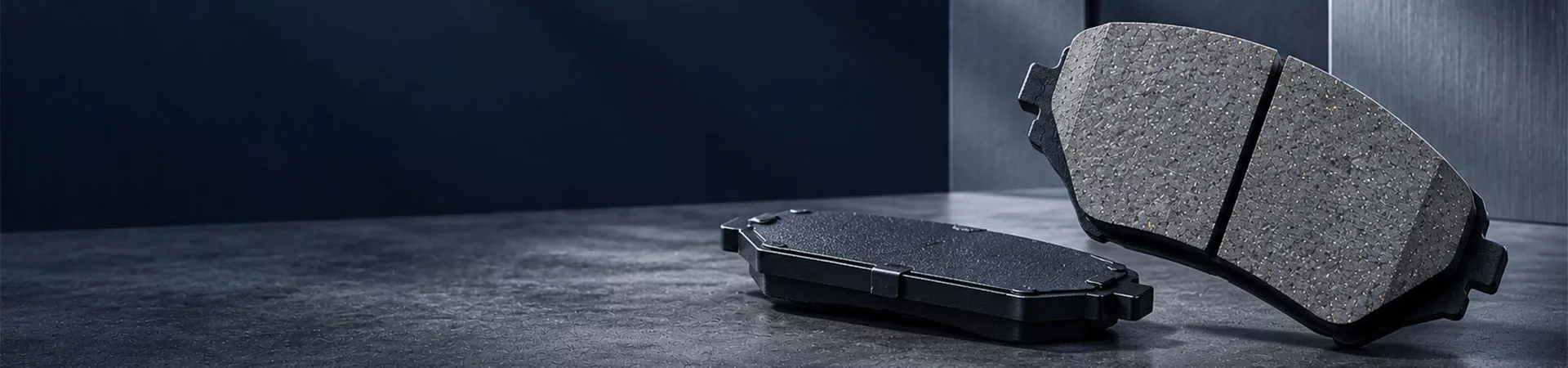
The commercial vehicle brake pads offered by MingYu, a professional brake pad manufacturer in China, are developed for commercial vehicles requiring high-load braking capacity, heat-resistance, long service life and reliable performance under heavy-duty operating conditions. As a China brake pad manufacturer and factory, we provide diverse friction formulations for commercial vehicle applications, with product options tailored around vehicle type, braking system, load capacity and severe working environments.
Commercial vehicle brake pads are critical friction components installed in the disc braking system of commercial vehicles. When the brake pedal is actuated, the brake caliper compresses brake pads against the brake disc, generating powerful friction force to decelerate heavy-weight vehicles and bring them to a complete stop. Friction material formula, overall dimension, steel backing plate and auxiliary accessories collectively determine braking stability, wear resistance, high-temperature performance, noise condition and overall service reliability.
These brake pads are engineered for heavy-duty commercial vehicles such as light-duty trucks, medium-heavy-duty trucks, coaches, city buses and logistics delivery vehicles, instead of ordinary sedans, hatchbacks or other light passenger cars. Commercial vehicle brake pads are normally selected based on vehicle brand and model, front or rear axle position, brake system type, axle load, OE number and required friction performance parameters.
The suitable formulation depends on the complete brake application, including vehicle characteristics, disc condition, temperature range, expected wear and noise requirements. Mingyu’s available formulations are documented in its associated production materials.
Commercial vehicles bear large loads and frequently encounter heavy-load braking scenarios, which put forward stricter requirements for friction material. Mingyu’s commercial brake pad production supports multiple material formulations, enabling customized friction-material matching for different working conditions rather than adopting a universal formula for all commercial vehicles.
The optimal formulation is determined by comprehensive commercial braking conditions, including vehicle gross weight, axle load, disc operating status, working temperature range, service-life expectation and noise limits. Mingyu’s available formulations are recorded in relevant internal production documents.
Commercial vehicle brake pads must sustain stable friction output under variable temperature, heavy pressure and different driving speeds. Reliable friction properties guarantee safe and controllable braking for heavily loaded commercial vehicles.
Brake pad abrasion is affected by friction material, brake disc matching status, vehicle gross load, road conditions and braking frequency. Properly selected formula matched with target vehicles helps realise predictable service life and lowers replacement frequency.
Brake squeal and vibration are related to friction ingredients, brake disc condition, caliper assembly, pad outline structure and vehicle chassis structure. According to actual application requirements, brake pads can be equipped with noise-reduction shims, chamfers and slots to alleviate braking noise and vibration.
Continuous downhill braking or frequent emergency braking will sharply raise the temperature of friction pairs. Commercial vehicle brake pads possess excellent thermal characteristics to maintain dependable braking performance within extreme operating temperature scope.
Working under heavy impact and shear force during braking. High structural strength prevents cracking, chipping or material peeling under heavy-duty working scenarios.
Mingyu Commercial Vehicle Brake Pads are developed for aftermarket replacement and original supporting commercial-vehicle braking scenarios, covering:
Front-axle and rear-axle brake pads may differ in overall dimension, friction performance index and installation structure. Therefore product selection should rely on specific commercial-vehicle specifications instead of merely vehicle classification.
For aftermarket procurement, correct brake pads shall be confirmed by following application-oriented reference information:
|
Selection Item |
Typical Reference |
|
Vehicle type |
Light‑duty truck, heavy‑duty truck, coach, city bus |
|
Position |
Front axle or rear axle |
|
Vehicle make and model |
Specific commercial vehicle application |
|
OE number |
Original equipment reference number |
|
Pad dimensions |
Length, width, thickness and profile |
|
Friction formulation |
Semi‑metallic, low‑metallic, organic, ceramic, etc. |
|
Brake system |
Matching caliper and disc configuration, rated axle load |
For new-project development or custom-made orders, OE numbers, vehicle application lists, technical drawings, dimensional parameters or physical samples can be adopted to verify fitment before formal mass production.
Mingyu’s supporting manufacturing facilities execute standardised full-set production procedures for commercial vehicle brake pads. Production steps contain raw-material compounding, heavy-gauge steel backing plate stamping, surface treatment, adhesive coating, hot press forming, constant-temperature high-pressure curing, brake pad pre-treatment, powder coating and finished-goods packaging.
This complete workflow ensures stable raw-material quality, precise pad forming, qualified surface treatment and consistent finished-product performance among different production batches. The production line combines semi-automated equipment and partial full-automated production units to satisfy mass-production demands for heavy-duty brake pads.
Select suitable brake pads according to practical vehicle parameters, axle load and real-world braking requirements.
For light-load commercial vehicles: Prioritize accurate dimensions, vehicle compatibility, OE part reference and balanced friction and noise-control performance.
For urban bus & frequent start-stop operation: Focus on formula properties for smooth braking, wear resistance and noise suppression under repeated frequent braking conditions.
For long-haul highway & mountain downhill operation: High-temperature resistance, anti-thermal-decay capacity, friction stability and wear resistance become core evaluation indicators.
For aftermarket distribution and fleet maintenance: Part-number accuracy, full-model application coverage, stable finished-product quality and strict batch specification control should be comprehensively considered.
The brake pads are designed for large gross vehicle weight, heavy axle load and high-intensity heavy-duty braking conditions of commercial vehicles. Passenger car brake pads are oriented toward light-load passenger cars with relatively small braking load and different working temperature ranges.
No. Multiple friction formulations including semi-metallic, low-metallic, organic and ceramic-series materials are available. Suitable formula shall be selected based on vehicle load grade and expected braking performance.
Vehicle brand, model, production year, front/rear axle location, axle-load parameter and OE part number are main identification references. Physical measurement of pad dimensions or real-object sample comparison are also feasible verification approaches.
Not in most cases. Front-axle and rear-axle braking loads differ greatly, so brake pads may vary in shape, dimension, friction index and mounting structure. Each axle application needs separate confirmation.
Replacement timing is determined by friction-layer residual thickness, vehicle operating intensity and manufacturer maintenance specifications. Warning signals including unusual braking noise, obvious decline of braking efficiency or severely worn friction layer require timely inspection and replacement.