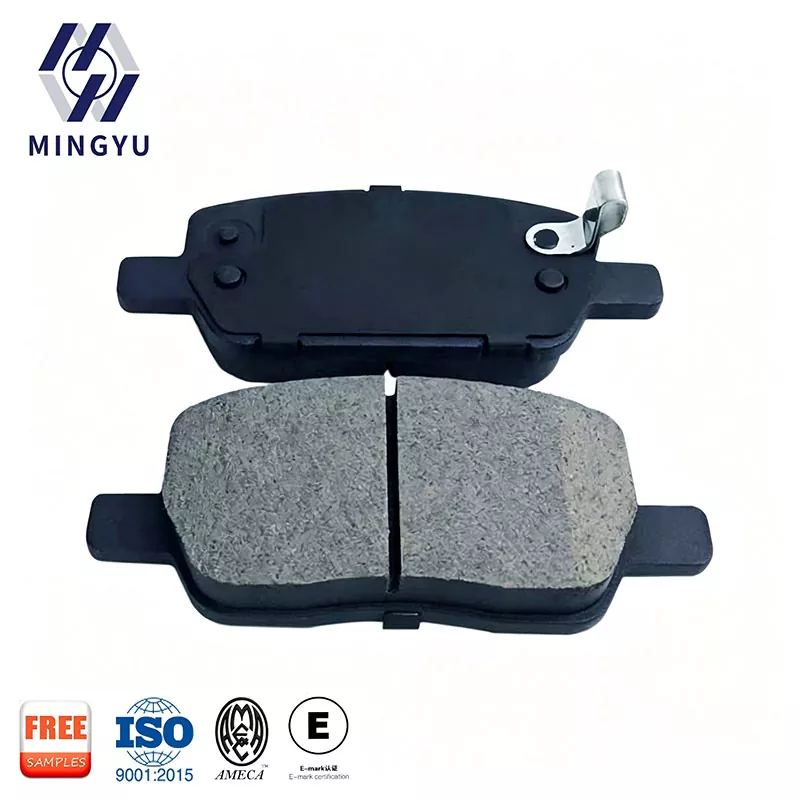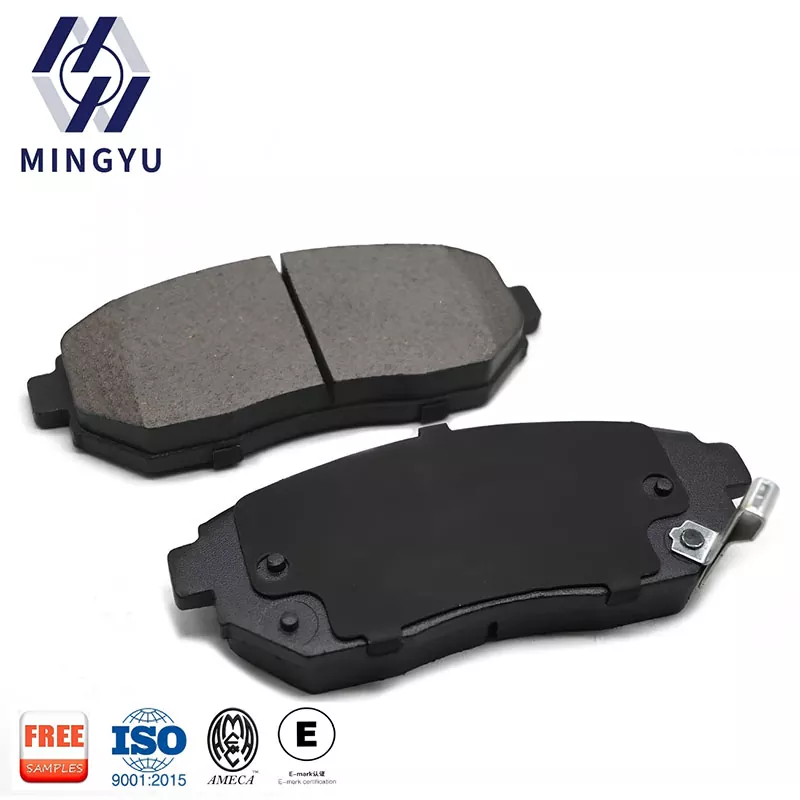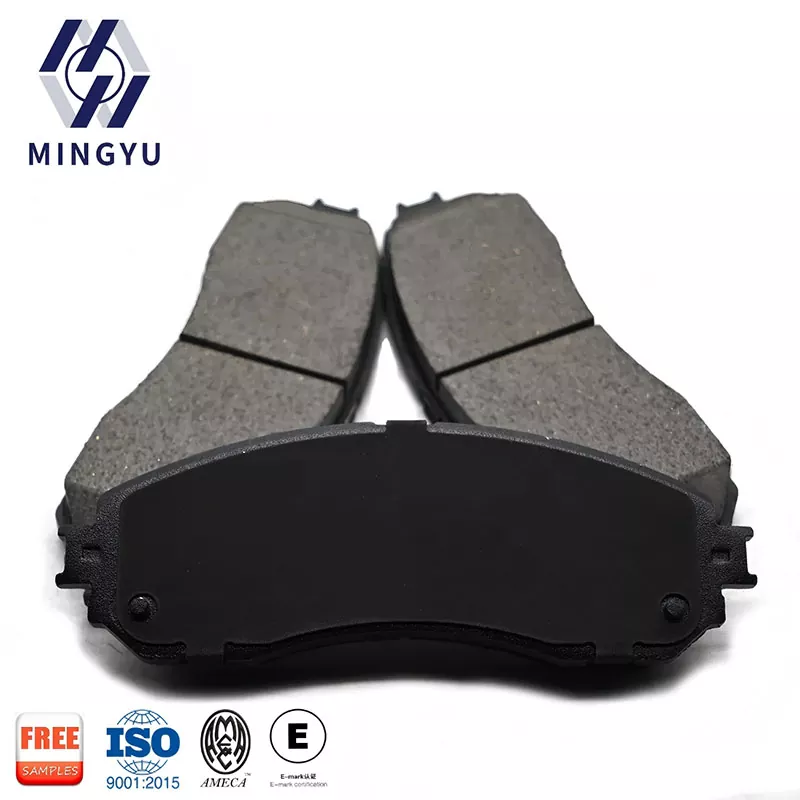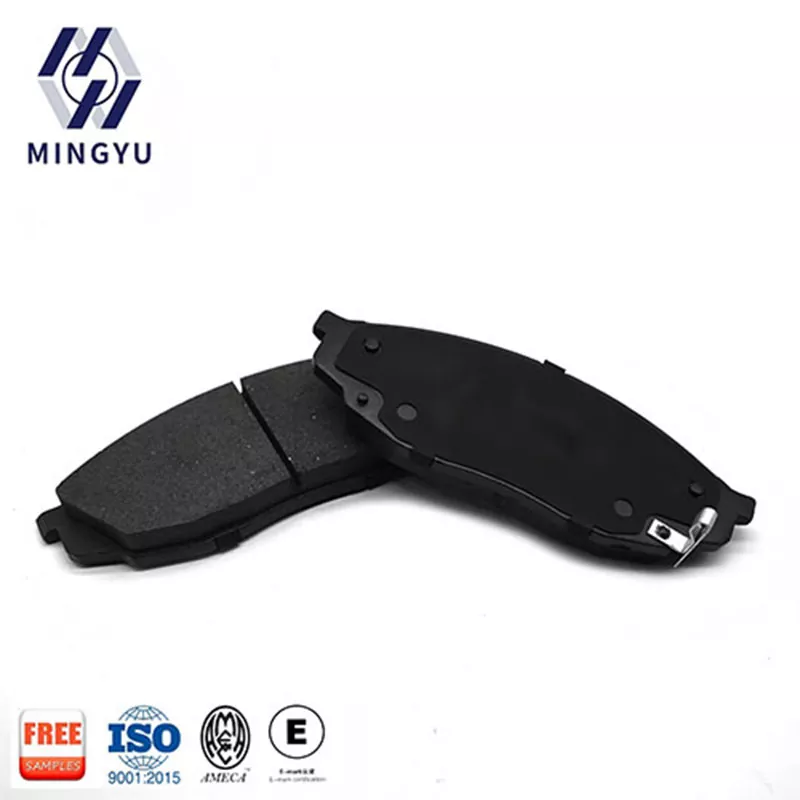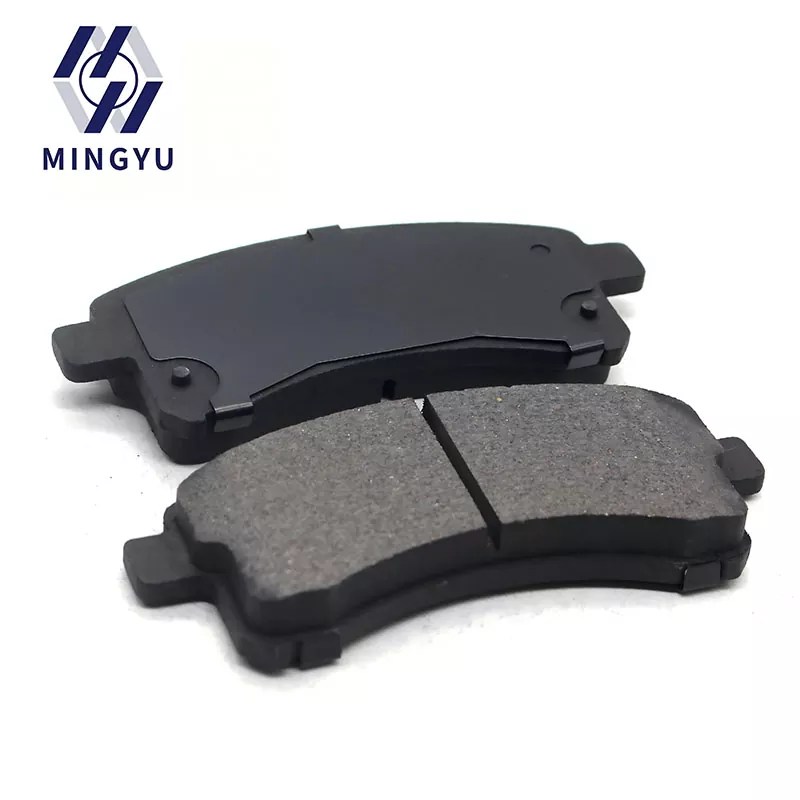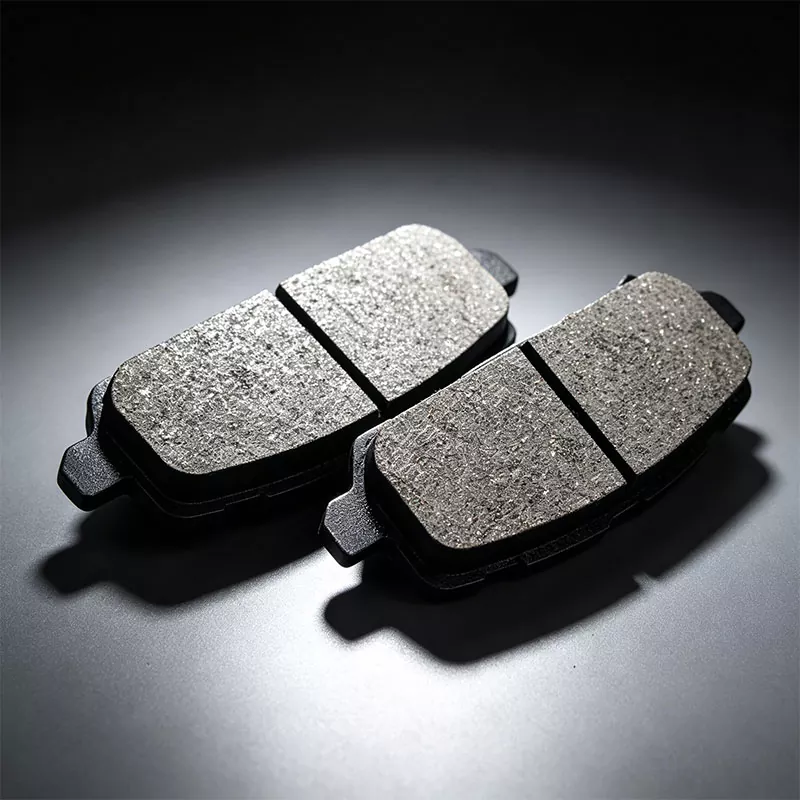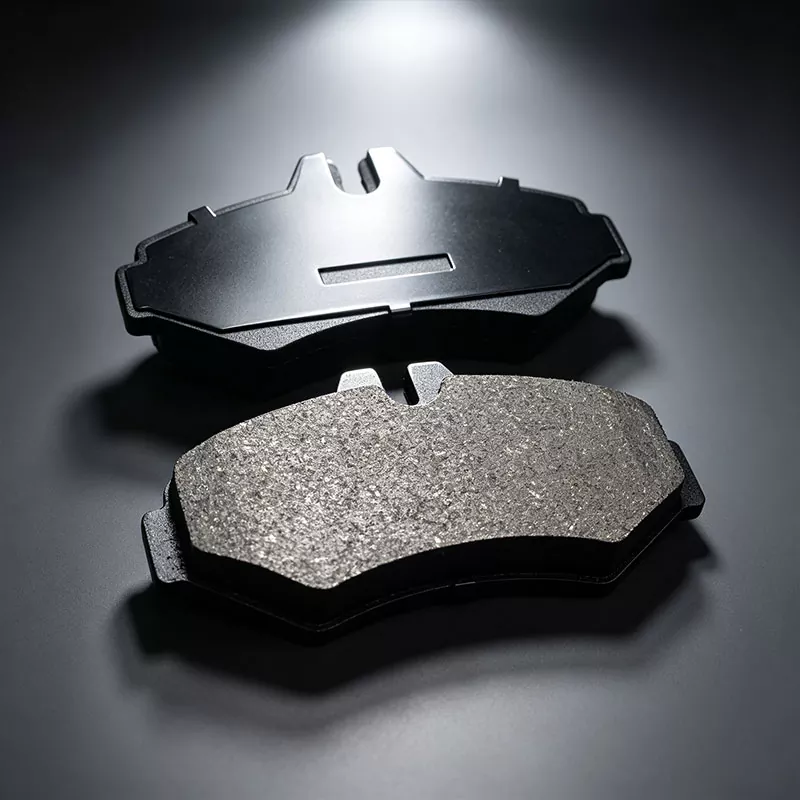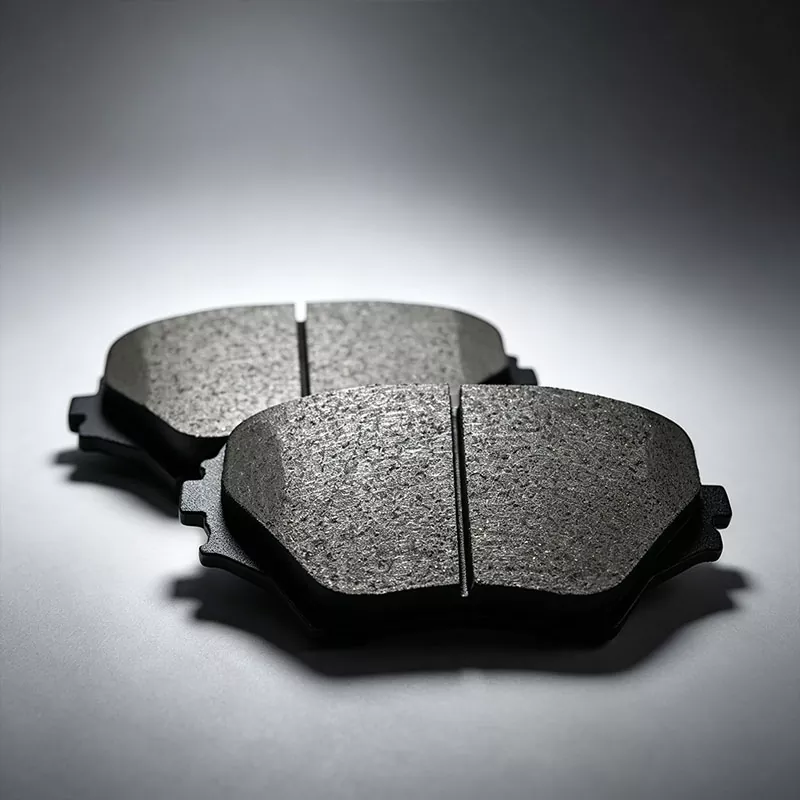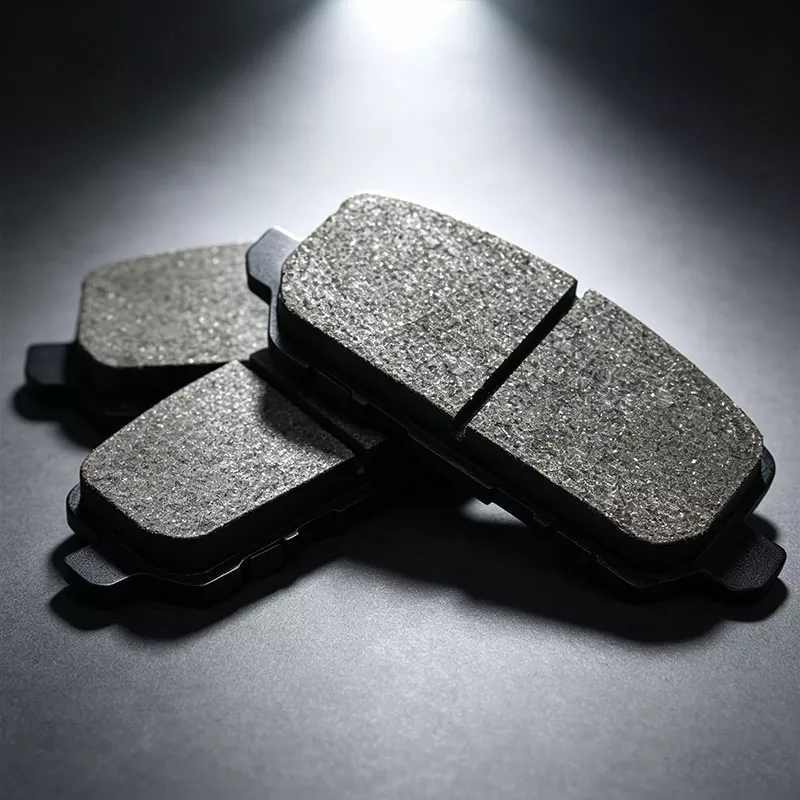
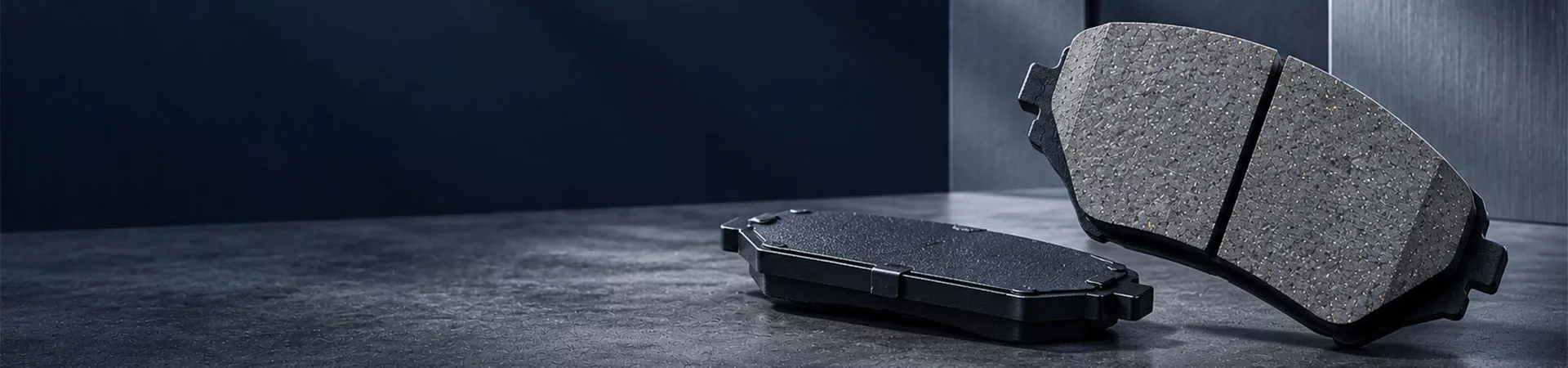
MingYu passenger car brake pads are developed for passenger vehicles requiring stable friction, consistent braking response, controlled wear and accurate fitment. As a China brake pad manufacturer and factory, we provide different friction formulations for passenger car applications, with product options designed around vehicle type, braking system and operating conditions.
Passenger car brake pads are friction components used in a vehicle’s disc braking system. When the brake pedal is applied, the caliper presses the brake pads against the brake disc, generating friction that slows the wheel and brings the vehicle to a stop. The pad formulation, dimensions, backing plate and supporting components all affect braking response, wear, noise and service performance.
These brake pads are intended for passenger vehicles such as sedans, hatchbacks, crossovers and SUVs, rather than heavy trucks, buses or other heavy commercial vehicles. Passenger car brake pads are normally selected according to vehicle make and model, front or rear axle position, brake system, OE number and required friction characteristics.
Different passenger vehicles require different friction characteristics. Mingyu’s brake pad production covers several material formulations, allowing the friction material to be matched to the application rather than using one formula for every vehicle.
The suitable formulation depends on the complete brake application, including vehicle characteristics, disc condition, temperature range, expected wear and noise requirements. Mingyu’s available formulations are documented in its associated production materials.
Brake pads need to maintain predictable friction as temperature, pressure and vehicle speed change. Consistent friction characteristics help provide controlled braking during everyday passenger-car driving.
Brake pad wear is influenced by the friction material, brake disc, vehicle weight, driving conditions and braking frequency. A suitable formulation and correctly matched application help maintain a more predictable wear pattern.
Brake noise can be affected by the friction material, brake disc, caliper, pad geometry and vehicle structure. Depending on the application, pad design can incorporate features such as shims, chamfers or slots to manage noise and vibration.
Repeated or prolonged braking raises the temperature of the friction pair. Passenger car brake pads therefore need suitable thermal characteristics to maintain braking behavior within their intended operating range.
Mingyu Passenger Car Brake Pads are designed for aftermarket replacement and passenger-vehicle braking applications, including:
Front and rear brake pads can differ in dimensions, friction requirements and mounting configuration. Selection should therefore be based on the specific vehicle application rather than vehicle type alone.
For aftermarket sourcing, the correct brake pad should be identified using application-specific information such as:
|
Selection Item |
Typical Reference |
|
Vehicle type |
Sedan, hatchback, crossover, SUV |
|
Position |
Front axle or rear axle |
|
Vehicle make and model |
Specific passenger car application |
|
OE number |
Original equipment reference number |
|
Pad dimensions |
Length, width, thickness and profile |
|
Friction formulation |
Semi-metallic, low-metallic, organic, ceramic, etc. |
|
Brake system |
Matching caliper and disc configuration |
For new or customized applications, OE numbers, vehicle application lists, drawings, dimensions or physical samples can be used to confirm fitment before production.
Mingyu’s associated manufacturing facilities use a defined production process covering key stages of brake pad manufacturing. The process includes raw material mixing, steel backing plate punching, surface treatment, adhesive application, press forming, constant-temperature curing, brake pad pretreatment, powder coating and packaging.
This process is designed to control material preparation, pad forming, surface condition and finished-product consistency across production batches. The production system includes semi-automated and partially fully automated equipment.
The correct brake pad should be selected according to the actual vehicle and brake-system requirements.
For standard passenger cars:
Focus on correct dimensions, vehicle compatibility, OE reference and balanced friction characteristics.
For frequent urban driving:
Consider formulation characteristics related to smooth braking, wear and noise control, especially under repeated stop-and-go conditions.
For highway or repeated braking:
Thermal performance, friction stability and wear characteristics become more important.
For replacement or aftermarket distribution:
Part-number accuracy, application coverage, consistent production quality and batch-to-batch specification control should be considered together.
Passenger car brake pads are developed for the braking systems and operating conditions of passenger vehicles, while truck and other commercial-vehicle brake pads are designed for heavier vehicle loads and different brake-system requirements.
No. Brake pads can use different friction formulations, including semi-metallic, low-metallic, organic and ceramic-based materials. The appropriate formulation depends on the vehicle application and required braking characteristics.
The vehicle make, model, year, front or rear axle position and OE part number are commonly used for identification. Pad dimensions or samples can also be checked when required.
Not necessarily. Front and rear brake systems can use different pad shapes, dimensions, friction requirements and mounting configurations, so each application should be checked separately.
Replacement depends on pad wear, vehicle usage and the manufacturer’s maintenance requirements. Signs such as abnormal brake noise, reduced braking response or a worn friction layer may indicate that inspection is needed.